
The Future of Healthcare, but First, Infrastructure
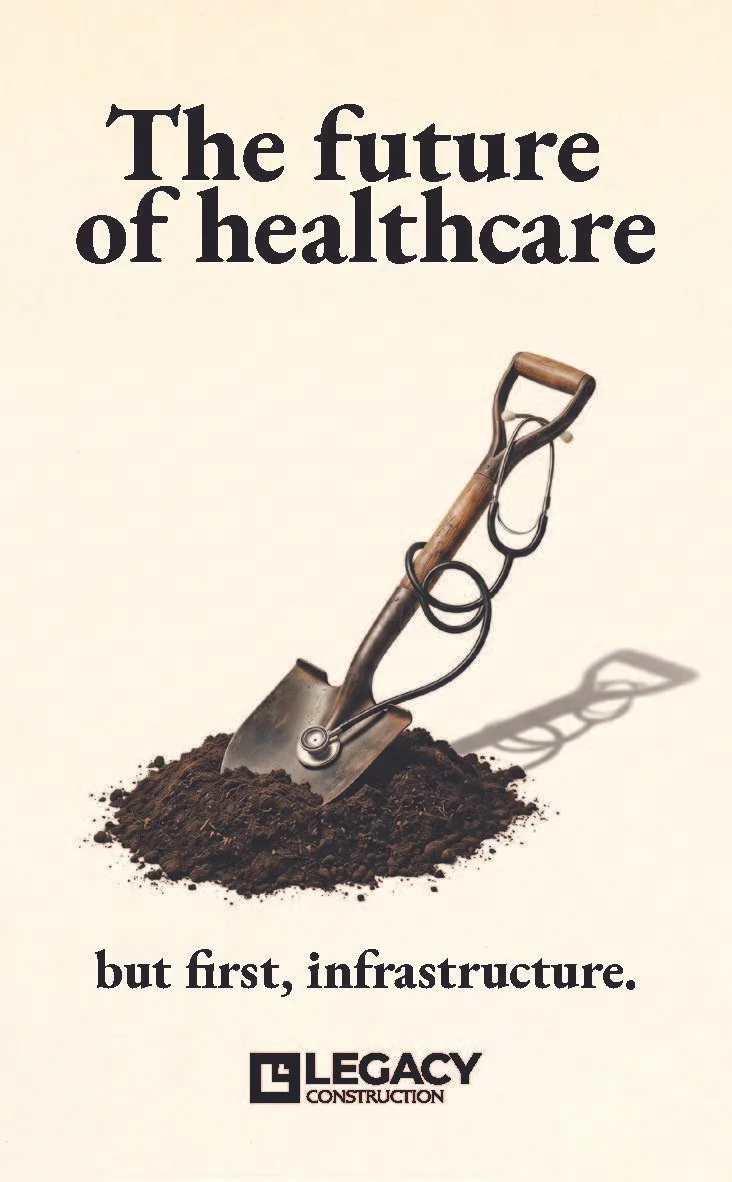
When we think about the future of healthcare, we often picture artificial intelligence, virtual care, robotic technology, advanced diagnostics, and personalized treatment. These innovations are changing how care is delivered and what patients and providers can expect from the healthcare experience. But none of them can exist without the infrastructure to support them. They need healthcare facilities built with the space, technology, and building systems required to put these advancements into practice.
Before new technology can be installed, new services can be introduced, or more patients can be reached, healthcare organizations need the right facilities in the right communities. Those facilities must be financially viable, thoughtfully planned, and prepared to support the changing demands of modern healthcare. The future of healthcare may be driven by innovation, but development and construction create the foundation that allows it to happen.
Healthcare Begins Before Construction
A healthcare project begins long before a shovel enters the ground. Legacy Realty & Development starts by identifying where gaps in access exist. Using HRSA, UDS, Census, demographic and market data, LRD analyzes underserved populations, growth trends, provider shortages, payer mix and other indicators of demand. Mapping tools help visualize these findings and identify the ZIP codes where a new health center could have the greatest impact.
Identifying a need is only the beginning. LRD then determines whether a project is viable from a real estate, financial, and development perspective. Potential sites are evaluated for visibility, proximity to the target population, traffic, public transportation, parking, patient access and room for future expansion. LRD also reviews zoning and entitlement requirements, utility availability, environmental conditions and other due-diligence items that could affect the project’s cost or schedule. The team compares whether renovating, leasing or building a new facility is the most practical option based on the organization’s budget, funding and long-term plans.
Before construction, LRD may evaluate multiple communities and properties, estimate development costs, build project budgets, review funding opportunities and assess financing options. Facility programming helps determine the appropriate building size, service mix, patient flow and functional requirements that will guide the architectural design. Development models allow clients to compare different scenarios before making a major investment decision.
Before the first drawing is created, extensive research, market analysis, financial modeling and strategic planning have already taken place. By the time a project reaches construction, it has a documented community need, a viable site, an established budget and a clear plan for the services it must support. This groundwork helps create an appropriately sized, financially sustainable facility while reducing risk, supporting funding efforts and preventing costly changes later in the project.
Facilities Shape How Care Is Delivered
Once the path forward has been identified, the physical environment must be built to support it. The layout determines how easily patients move from arrival and check-in to exam rooms, treatment areas and departure. It also affects how efficiently providers access workstations, supplies, equipment and support spaces throughout the day.
LRD uses facility analytics, including space utilization, productivity and operational performance, to help establish what an organization needs from its environment. The site and building must be able to support an efficient clinic layout, future expansion and the planned mix of medical, dental, behavioral health, pharmacy and support services. Legacy Construction then works with the project team to carry those needs into the finished facility.
Technology and specialized medical equipment must also be considered early. Depending on how the space will be used, equipment may require specific electrical capacity, plumbing, ventilation, structural support or data connections. Legacy Construction helps coordinate these requirements throughout the building process while incorporating essential elements such as sound control, secure areas, infection-control measures and ADA-compliant access. These details help protect patient privacy and safety while giving providers the systems they need to deliver care effectively.
Planning for the Future
LRD uses projected patient demand, facility utilization and operational data to anticipate future space needs. Legacy Construction translates those needs into adaptable layouts and building systems with the electrical, data, plumbing and ventilation capacity to support additional providers, expanded services and future medical equipment.
Research identifies where care is missing. Development determines what is feasible. Construction creates the physical space where services, technology and people come together. Collectively, this is the infrastructure that makes the future of healthcare possible.